About BugWeb
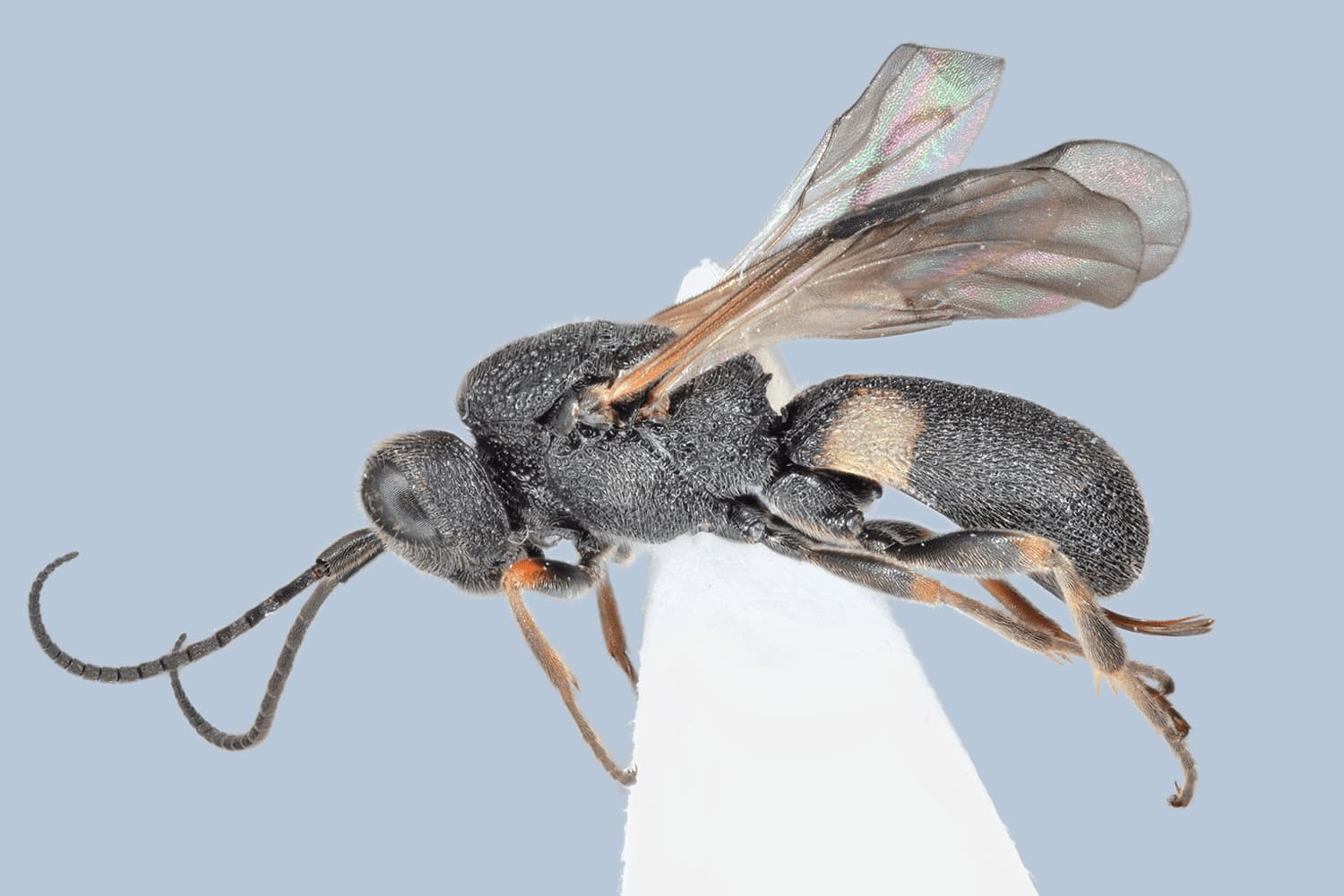
BugWeb is the site owner's personal project focused on hard-to-identify insects in the Nordic region, mostly parasitoid wasps. It started as a place to keep identification keys made for personal use and has grown a bit since then.
What the site is for
Right now there are three goals with this site:
-
Make difficult groups easier to identify
Mainly Ichneumonidae, a group where much of the literature is scattered, old, dated or hard to get hold of. The interactive keys combine diagnostic characters from several different sources and specimens in the site owner's collection. The taxon pages are an attempt to concentrate what is known about each species in one place.
-
Make the collection accessible
The collection pages show the site owner's personal collection with their label data and photographs, many of them DNA barcoded.
-
Be useful for taxonomic work
By combining information from various sources, making the site owner's collection easily accessible, sharing molecular data and flagging potentially undescribed species, the site owner aims to create a resource that can assist taxonomic studies.
The site owner is not a professional entomologist and the interactive keys often have undergone only limited testing. The keys can speed up an identification, but results should ideally be compared against trusted sources. If you find an error, please reach out.
Taxonomy and names
BugWeb is not a taxonomic authority. Please don't cite it!
The taxonomy here is an attempt to merge the national checklists of the Nordic countries into one list. Where they disagree, judgment calls had to be made, and some of those choices will be wrong or out of date. For anything that matters, such as publications, reports or red-list work, check the name against the checklist for your country and the original literature.
Scope
BugWeb's scope is currently limited to the mainland Nordic region. The species list is built from the checklists of Sweden, Norway, Finland and Denmark. Expanding to include other Northern European countries, such as Iceland, the UK, Ireland and the Baltic states, is on the table but would require extensive expansions to several keys.
Select a country on the map below to see which lists were used for it.
How the lists are merged
A species is treated as Nordic if at least one of the national checklists lists it as present, or if there is a Nordic specimen of it. When the checklists use different names for the same species one is selected after reviewing recent revisions, international taxonomic sources and, for Ichneumonoidea, Taxapad.
BugWeb so far only focuses on Hymenoptera. Keys for other groups may exist, but no comprehensive taxonomy has been compiled.
Additional taxa
Taxa that are not currently known from the Nordic countries are often included if they are known from nearby regions or if they are likely to be found in the Nordic countries. Currently undescribed taxa may also be included if the evidence for their existence is strong.
These taxa are marked on their respective pages and in lists:
- Not recorded from the Nordic countries. Not currently on any of the included countries' checklists or marked there as not recorded.
- Not established. All Nordic records are of occasional, introduced or imported individuals.
- Undescribed. A morphospecies that has not yet been formally described.
Collecting ethics
Most of the insects this site focuses on can't be identified reliably from photographs, which makes their collection necessary. This is done as responsibly as possible by the site owner, following the ethical rules of the Swedish Entomological Society (Sveriges Entomologiska Förening). In practice that means:
- A purpose for every specimenCollecting for identification, reference and study, not for numbers.
- Only what is neededA few specimens of a species, never mass collecting of one species.
- Protected species and areasNo collecting of protected species, in reserves without permission, or of species under a voluntary collecting stop.
- DocumentationAt least the place, date, habitat and collector are recorded, as shown on the specimen pages.
- TrapsTraps are often the most effective method for collecting certain groups of insects, but naturally also catch other groups or more than what can be handled. Metabarcoding or sending material to experts is done when possible.
- Nothing is bought or soldSpecimens from the collection are never sold, and nothing is collected for sale.
- Records are sharedIdentified material is shared through this site and reported to Artportalen where possible.
- FutureThe aim is for the collection to eventually end up in a museum.
Note that the site owner can only vouch for the specimens they have personally collected.
Photos and contact
The photographs on this site are either taken by the site owner or as a part of a larger project unless stated otherwise. Special thanks to Krister Larsson, Lars-Ove Wikars and Arvid de Jong for allowing some of their photos to be used.
If you have questions or suggestions, need help with an identification, or notice an error, feel free to reach out.